
About
I take AI from prototype to production — and founders from surviving to thriving.
I’m Mohamed F. Ahmed — Mo to most people. I’ve spent twenty years building at the intersection of deep technology and business: shipping products at Microsoft, Intel, and Amazon; founding and exiting my own startups; writing about what the journey does to the people who attempt it; and now leading a global practice that helps AI startups and enterprises get generative AI out of the demo and into the world.
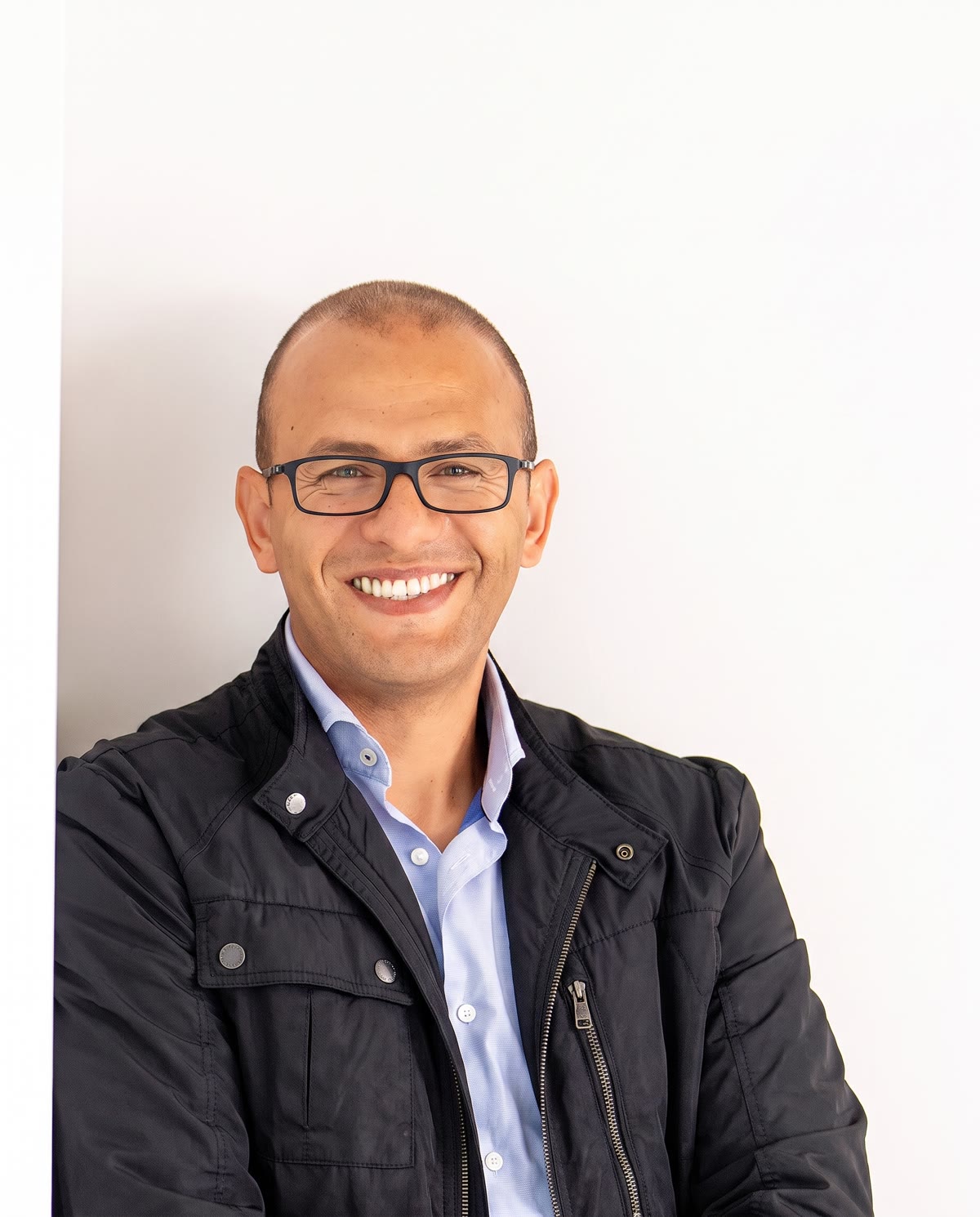
The short version
- Role
- Global Head of GenAI Startup Strategy and Practice
- Education
- Ph.D. Computer Science & Engineering, University of Connecticut
- Big tech
- Microsoft · Amazon · Intel — product & business leadership
- Founder
- 4 startups founded, 2 exits · Magalix — acquired by Weaveworks
- Author
- The Inside-Out Entrepreneur (2024)
- Advisory
- 500 Startups & Techstars advisor
- Base
- Seattle, Washington
From engineer to builder
I started as an engineer because I wanted to know how things actually work — all the way down. That curiosity carried me through a Ph.D. in Computer Science and Engineering at the University of Connecticut, and into some of the most demanding product organizations in technology: Microsoft, where I helped build developer and cloud experiences; Intel, where I worked at the boundary between silicon and software; and Amazon, where I learned how relentlessly customer-obsessed execution scales.
Big companies teach you how systems ship at scale. But somewhere along the way I stopped being satisfied with improving machines that already existed. I wanted to build one from nothing.
Magalix, and the leap
In 2016 I founded Magalix to answer a question I kept meeting in the field: as companies rushed into Kubernetes and cloud-native infrastructure, who was making sure any of it was secure, compliant, and sane? We built an AI-driven platform for cloud-native governance — policy-as-code before most teams knew they needed it.
The company nearly broke me before it made me. In 2018, after a year of sleepless nights treating every threat to the company as a threat to myself, my body simply stopped. I couldn’t get out of bed. That collapse — and the rebuild that followed — changed how I lead more than any business lesson ever has.
Magalix recovered, grew into a trusted name in cloud-native security, and was acquired by Weaveworks in January 2022. It was my second startup and the proof of something I now hold as conviction: the durability of a company is downstream of the durability of its founder.
The durability of a company is downstream of the durability of its founder.
The book I had to write
The Inside-Out Entrepreneur exists because the most important variable in my startup wasn’t in any pitch deck — it was my own mental, emotional, and spiritual conditioning. The book is part memoir, part training manual: the frameworks I wish someone had handed me before the leap, drawn from my own worst days and from hundreds of conversations with founders since. Through Boundless Founder, I keep doing that work — mentoring founders on the inner operating system that decides whether the outer one ever ships.
Where I work now: the production gap
Today I lead GenAI startup strategy and practice globally — a team of applied scientists, strategists, and builders working with frontier AI startups on one side and the world’s largest enterprises on the other (my day job is at AWS; the views here are my own). The through-line of the work is what I call the production gap: most generative AI initiatives die between the impressive demo and the deployed system. Industry analysts put pilot failure rates between 70 and 95 percent — and it’s almost never the model’s fault.
Closing that gap is a methodology problem. It takes qualification discipline before a single line of code, reusable patterns instead of heroic one-offs, quality gates that treat AI systems like production software, and partner ecosystems that carry solutions the last mile. I’ve led hundreds of engagements built on that playbook, and it’s the subject of most of what I write and speak about.
I also spend real time with investors — venture funds and private-equity portfolios trying to turn “AI strategy” from a board-deck slide into portfolio-wide operating reality. Startups tell me where technology is going twelve months early; enterprises tell me what it takes to absorb it. Sitting at that intersection is the most interesting seat in technology right now.
Off the clock
I live in Seattle with my family. I mentor founders through 500 Startups and Techstars, guest-lecture on entrepreneurship, and record the occasional podcast episode on entrepreneurial conditioning. I still write code when nobody’s watching — mostly to test my own claims about what AI can and can’t do yet.